
API platforms in context
Developer tooling / infrastructure. Within the wider “SaaS & AI” stack: SaaS and AI companies — we assemble the international corporate stack: holding company, IP-co, operating subsidiaries in every market. IP ring-fencing and R&D credits in the right jurisdiction.
The INNOVA team in Singapore runs this vertical to the same standards as the rest of our global network.
What API platforms actually is
API platforms is one of 5 sub-verticals within SaaS & AI. To work out whether it fits your operation — and how to structure it for compliance, banking and tax efficiency — it helps to look at the sector as a whole first.
Technology companies that need an international corporate structure: IP ring-fencing and a holding company in the right jurisdiction. Tax positioning that holds up under audit rather than unravelling at the first review. The “SaaS & AI” segment has matured significantly over the past decade: regulators have caught up, banks have tightened, and the cost of a structural mistake has grown for operators that didn't plan ahead.
Within that landscape, API platforms occupies a specific niche. Developer tooling / infrastructure. Its operating profile differs from those of neighbouring sub-verticals — different banking partners accept it, different regulators supervise it, and different tax positions apply.
The choice of structure matters as much as the activity itself. Holding company (EE/AE) · IP-co · OpCo (one per market). The exact configuration depends on where revenue is generated, where customers sit, which regulators apply, and the operator's long-term ambitions.
Most “SaaS & AI” operators we've worked with built their operating stack twice — once at launch with a generalist provider, and again with us after the first iteration buckled under regulatory or banking pressure. The second time is faster, cleaner and survives.INNOVA · SaaS & AI practice
How this vertical sits in the wider stack
API platforms sits inside the SaaS & AI operating stack. Stripe, Mercury, multi-currency corporate accounts. The banking choice directly drives which jurisdictions are workable, what the KYC pack has to look like, and how long onboarding really takes.
Standard corporate income tax; a special licence is rarely required. That compliance regime has to be in place before the legal entity goes live — not bolted on after the regulator's first request.
R&D credits, contractual positioning of the IP entity, transfer pricing. The tax dimension layers onto the structure. We model it before incorporation, rather than discovering it at year-end. Singapore makes this especially relevant: for foreign shareholders without a local director, a nominee director is generally required. PSA licensing for fintech operators is a separate track, with its own nuances.
Why this matters in Singapore
Singapore is the operating hub of the Asia-Pacific region, with territorial taxation, a strong regulator (MAS), and the rule of law. Our priority for structures focused on Southeast Asia and for fintech licensing under the PSA. For “API platforms” operators, the jurisdictional context defines what is possible, what is expensive, and what is straightforward.
What this means in practice
For an operator considering “API platforms” in Singapore, the practical sequence is: scope the operation, confirm regulatory fit, choose the jurisdiction(s), design the structure, build the compliance programme, file for licensing where required, open banking, and launch.
Operating topology
A typical “API platforms” operator uses a three-tier structure.
A fit · or not
Not every operator is a fit for this vertical — here's how we assess fit at the scoping stage.
- Have a clear product/service within this regulatory category
- Plan to operate at meaningful scale
- Can document genuine substance
- Treat compliance as a working programme, not a checkbox
- Have a planning horizon of several years
- Want a “light” structure with no operating substance
- Need to launch in 2 weeks without a compliance programme
- Have an unclear source of funds / customer profile
- Treat compliance as a formality
- Plan to wind the structure down within 12 months
Banking · compliance · tax
The three operating layers that decide whether the structure actually works.
How money moves
Stripe, Mercury, multi-currency corporate accounts
What the regulator checks
Standard corporate income tax; a special licence is rarely required
Where the money lands
R&D credits, contractual positioning of the IP entity, transfer pricing
4 services in the stack
The full list of INNOVA services typically engaged for “API platforms” operators.
From practice
A real project profile — anonymised.
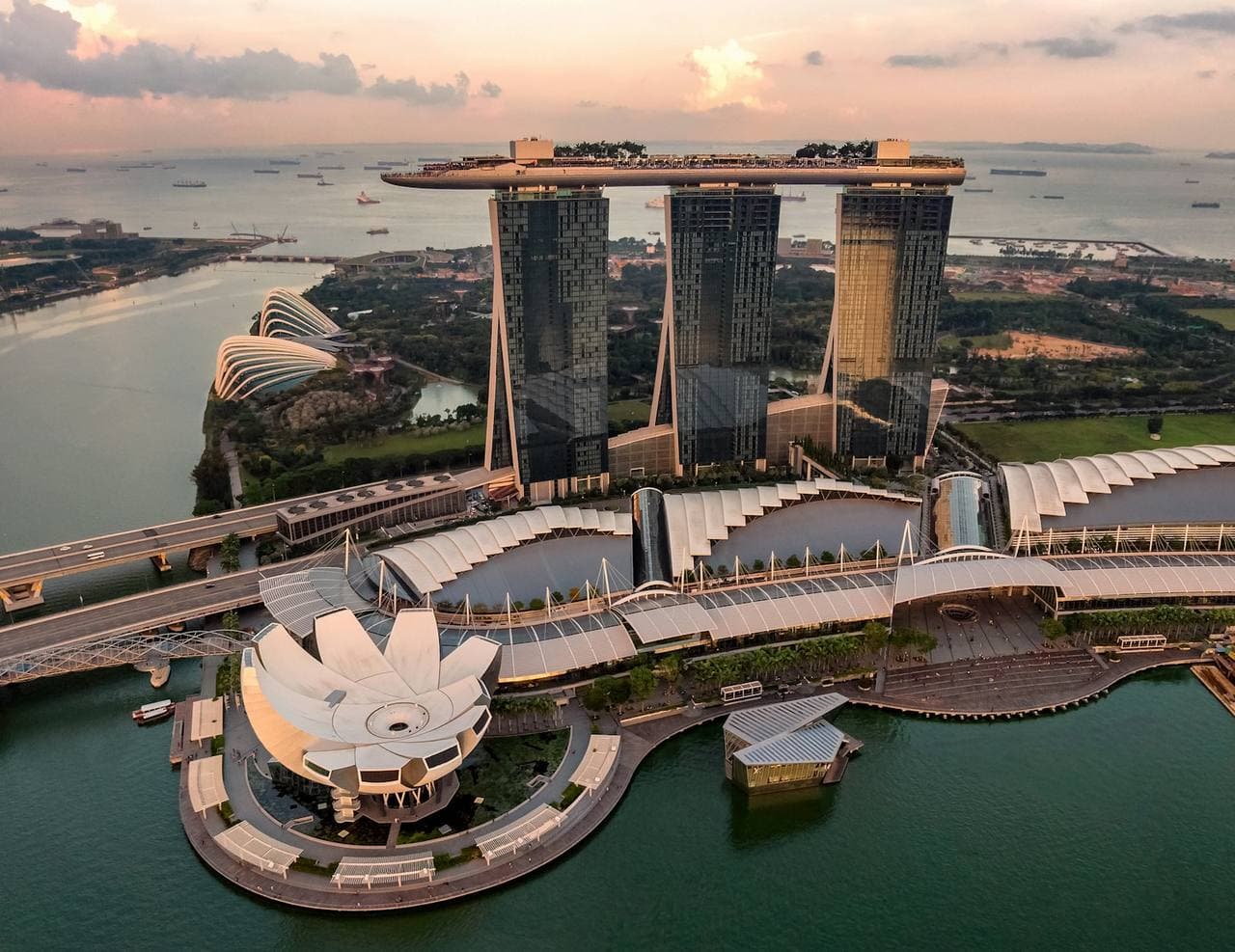 ▸ SaaS & AI · Singapore
Stack assembled in 14 weeks
An operator with multi-jurisdiction ambitions brought in INNOVA for the full “SaaS & AI” stack. We ran a parallel sequence: entity registration, account opening, compliance programme and licensing.
From year two: the same desk handles ongoing administration.
What can go wrong
Every vertical carries operating risk. We name it up front.
Regulatory drift
The regulatory regime for the “SaaS & AI” segment in Singapore moves faster than in adjacent sectors. For “API platforms” that means one thing: the compliance programme is a living document, not a one-off filing. For projects in Singapore we run a quarterly review as standard practice.
Bank de-risking
Banking in Singapore for this profile has its own dynamics: stripe, Mercury, multi-currency corporate accounts. Sectors that are hard to bank can lose their bank with little warning — so in Singapore we set up two backup banking relationships from day one.
Substance requirements
Regulators in Singapore increasingly test real operations, staff and activity for operators in the “API platforms” segment. We design the structure in Singapore with substance built in from the start — not bolted on after the first enquiry.
Cross-border tax exposure
The tax position in Singapore for “API platforms” has its nuances: R&D credits, contractual positioning of the IP entity, transfer pricing. Multi-market operations create withholding-tax and transfer-pricing exposure — we model the effective rate in Singapore before incorporation, not after.
Four ways to start
Start with a scoping call, then move to the next format.
Scoping call
A 30-minute online consultation.
Written analysis
A written analysis of the vertical within 5 business days.
Operating roadmap
A full plan for complex multi-jurisdiction projects.
Direct execution
You know what you need — we deliver the full stack.
Download the brochure or fill in the questionnaire
A sector brochure, or an online questionnaire that creates your portal account.
Vertical brochure · API platforms
Full PDF · operating stack, regulatory landscape, project examples.
Fill in the questionnaire
A 4-step questionnaire · creates an INNOVA portal account.
Frequently asked questions
The questions we're asked most often about “API platforms” in Singapore.
Technology companies that need an international corporate structure: IP ring-fencing and a holding company in the right jurisdiction. Tax positioning that holds up under audit rather than unravelling at the first review. The full INNOVA operating stack is assembled in sync.
Holding company (EE/AE) · IP-co · OpCo (one per market). The exact configuration is confirmed at the scoping stage.
Stripe, Mercury, multi-currency corporate accounts. Account-opening timelines vary by profile.
Standard corporate income tax; a special licence is rarely required. Compliance is built in parallel with the legal entity.
R&D credits, contractual positioning of the IP entity, transfer pricing. It is modelled before incorporation, not after.
The same named partner who scoped your project handles the ongoing administration. No hand-off.