
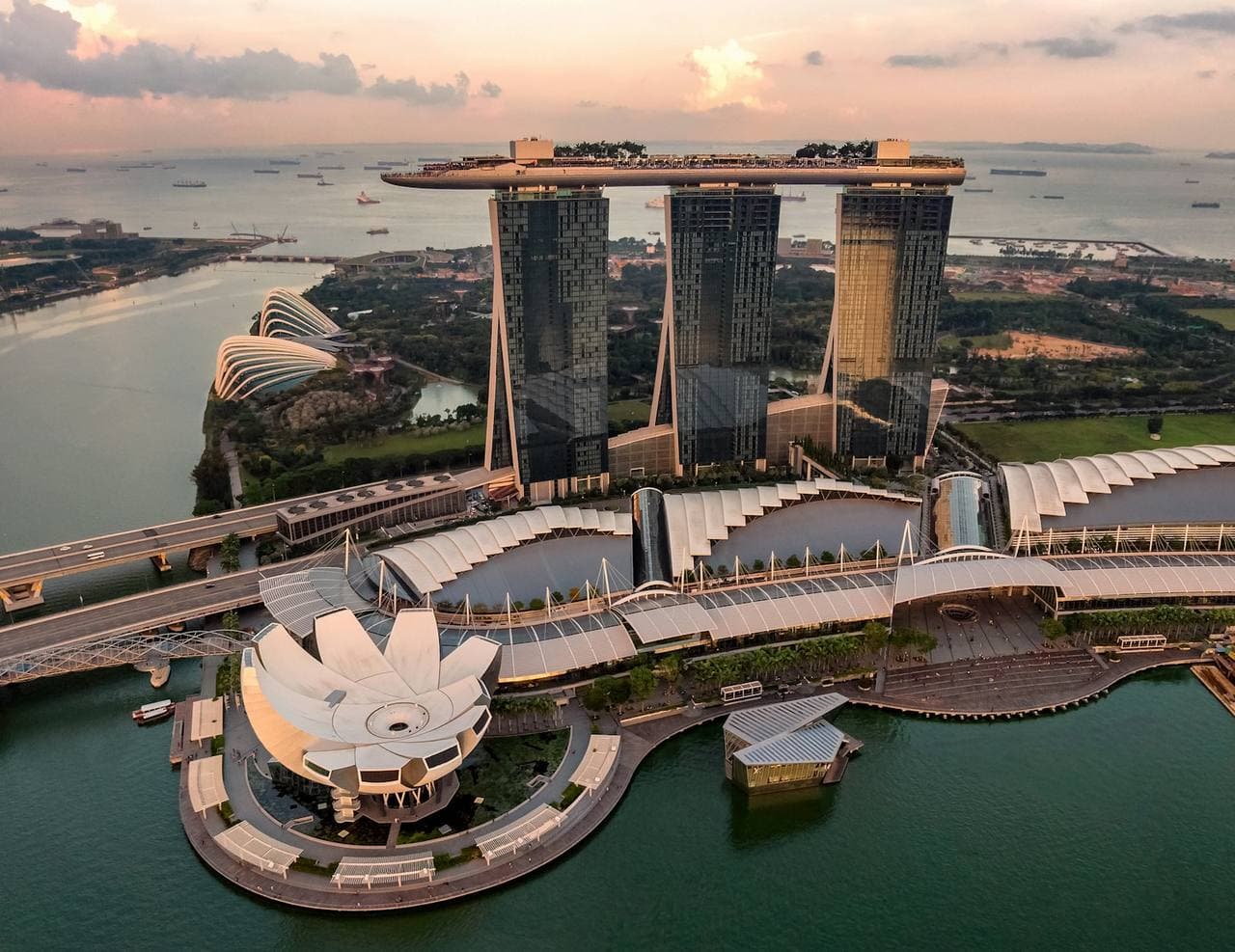
What this area covers: IP migration in Singapore
IP migration is one of 6 parts of our “Restructuring” practice. It covers the full cycle from initial scoping to operational launch, run by a single named partner from our Singapore practice.
What it is in Singapore: transfer of intellectual property between jurisdictions.
How we handle IP migration
The “IP migration” project in Singapore is structured as a 4-stage process run by a single named partner.
M&A support, voluntary dissolution, cross-border entity migration, and IP transfers — clean exits and clean moves.
The same desk that runs IP migration handles your banking, bookkeeping, compliance and — where needed — your wind-down.INNOVA · Operating model
Why Singapore
Singapore is the operating hub of the Asia-Pacific region, with territorial taxation, a strong regulator (MAS), and the rule of law. Our priority for structures focused on Southeast Asia and for fintech licensing under the PSA.
A reliable regulatory environment
Banking ecosystem
Corporate tax 17% (effectively lower with reliefs)
INNOVA represented on the ground
Why INNOVA
Operational differences that hold up on the 2nd, 5th and 10th project — not just at first impression.
One partner — the whole cycle
Registration, banking, tax, compliance, immigration — run by one team from start to finish.
14 years of practice
Working since 2012 through several regulatory cycles — including FATCA/CRS, the tightening of banking, and the introduction of UAE CT.
Regulator-grade documentation
Every output document is ready for audit and investor scrutiny — whatever the size of the deal.
Multi-jurisdiction within the group
Cross-border work is handled inside the group — no chain of external subcontractors.
How the work is structured
A 4-stage process led by a single named partner — from the intro call to the operational hand-over.
Diagnostics
Current state, objectives and constraints
Route design
Roadmap and tax position
Execution
Filings, transfers and closures
Liquidation
Final reporting and liquidation
What we need from you · what you get from us
What we need from you to begin — and what you walk away with. We won't pester you with needless questions: we already have most of the answers.
- Current entity structuredocumented
- Ownership and shareholdingverified
- Outstanding liabilitiesstated
- Tax position (current)reviewed
- Restructured entity layoutdocumented
- Intercompany agreementssigned
- Tax-clearance certificatewhere applicable
- Liquidation/strike-off (if needed)completed
- Final filings submittedregulator
Four ways to work together
We don't quote a fixed price without understanding your situation — cost depends on the complexity of your case. Start with an initial call, then we pick the right format.
Intro call
A 30-minute online consultation. We discuss your situation, define the project scope, and propose a structure and timeline.
Written analysis
A written consultation with a full review of the business — tax positioning, structure options, jurisdiction comparison, banking path. Turnaround: 5 business days.
Operating roadmap
For complex situations — multi-jurisdiction structures, regulated activity, founder relocation. A full plan with stages, dependencies, deliverables and timing.
Direct execution
You know what you need — we execute. No advisory mark-up and no discovery phase.
Fill in the questionnaire
Complete the online questionnaire: it creates your account on the portal, where your structure, renewal reminders and documents will live.
Fill in the questionnaire
4 steps · creates an INNOVA portal account · 24h review.
Once you submit the questionnaire we create a portal account. Inside: your live structure, a renewals calendar (annual returns, register updates, tax filings), a document vault (certificates, share register, bank letters), a partner chat and project status. A single place for your entire operational life.
From a client
A review from a client who went through a comparable project. Verified, the engagement is ongoing.
Frequently asked questions
The questions we're asked most often. If yours isn't here, an intro call is the fastest way to get an answer.
Most “IP migration” projects in Singapore run 3–6 months start to finish. The fastest stage is document filing; the longest is post-registration onboarding (banking, tax registration). A single named partner runs the project throughout.
Scope and price — project-based. Scope turns on the ownership structure, the number of jurisdictions involved and whether the activity is regulated. A fixed quote follows a 30-minute scoping call.
In most cases, no. The entire process runs remotely under a notarised power of attorney. A handful of jurisdictions require an in-person visit (typically biometrics for a residence permit) — we plan those as efficiently as possible.
A dormant or non-trading Singapore company can apply to ACRA for striking off under Section 344 of the Companies Act. Requirements: trading has ceased, no outstanding liabilities, assets, or tax obligations, tax clearance from IRAS obtained, and all directors consent. ACRA gazettes the application with a notice period before the company is dissolved — the full process typically takes 4–6 months. It's the simplest exit for a company that never traded or holds no assets.
Striking off (Section 344) is a lighter administrative route for dormant, solvent, asset-free companies and takes 4–6 months. Members' Voluntary Liquidation (MVL) is a formal winding-up for solvent companies with assets to distribute: a licensed liquidator, a declaration of solvency, creditor and shareholder resolutions, and formal asset distribution. MVL typically takes 9–12 months but gives a clean, court-recognised dissolution. Reserves reach shareholders tax-efficiently.
Yes. Since 2017, Singapore's inward re-domiciliation regime under the Companies Act lets a foreign corporate entity move its registration to Singapore and become a Singapore company while keeping its legal identity and corporate history. The applicant must meet size criteria (e.g., total assets exceeding S$10 million or revenue/employee thresholds), be solvent, and be permitted to re-domicile under its home jurisdiction's laws. Contracts, IP, and banking relationships carry over. No liquidation needed.
IP migration in other countries
The same service — in every jurisdiction we run. One desk, one standard.


